Showing posts with label navigator. Show all posts

Tuesday, September 15, 2009

Franz Herzog


Crew Member

Age: 29

Hometown: Munich, Germany

Occupation: Navigator

Location at time of fire: Control car

Survived


Franz Herzog was one of the Hindenburg's navigators. He had flown the previous year as a navigator on the ship’s maiden flight on March 4, 1936. On the Hindenburg's first North American flight of the 1937 season, Herzog was one of four navigators aboard, the others being Max Zabel, Eduard Boetius, and Christian Nielsen.

As the Hindenburg approached the mooring area at Lakehurst at the end of its last flight Herzog was off watch, up in the mail room above the control car canceling some souvenir letters. When the signal for landing stations was sounded, he climbed down into the control car and took his landing station at the the engine telegraphs on the starboard side of the forward area of the control car, where he would relay commands from Captain Max Pruss to the mechanics in the engine gondolas. When the ship caught fire a short time later, Herzog jumped out one of the control car windows along with the rest of the command crew. He escaped the fire, but was hurt seriously enough to be hospitalized for weeks afterwards at Lenox Hill Hospital in New York City. His injuries were such that his doctors advised that he not be interviewed by the Board of Inquiry when they visited Lenox Hill Hospital three weeks after the disaster.


Franz Herzog and fellow crew survivor Josef Leibrecht (w/ bandaged hands) outside of Lenox Hill Hospital.


Though he did recover from his injuries and return to Germany that summer, Herzog bore scars long afterwards. This did not stop him, however, from joining the crew of the Hindenburg’s sister ship, the LZ-130 Graf Zeppelin, on its maiden flight on September 14th, 1938. Along with Captain Albert Sammt, another Hindenburg survivor, Herzog flew as a watch officer.

It has been variously reported that Franz Herzog later died in a Russian prisoner of war camp during World War II, and that he was killed during the Russian assault on Vienna during the last weeks of the war.


Thanks to John Tabert for the photos of Franz Herzog, and for the information about Herzog having been in the mail room prior to taking his landing station. John's father was a patient in the same room as Herzog at Lenox Hill Hospital and the two men struck up a friendship and continued to keep in touch even after they had left the hospital.

Wednesday, March 18, 2009

Max Zabel


Max Zabel
   Crew Member

   Age: 29

   Hometown: Walldorf, Germany

   Occupation: Navigator (third officer)

   Location at time of fire: Navigation room, control car

   Survived


Max Zabel was one of four navigators on the Hindenburg's last flight, the others being Franz Herzog, Christian Nielsen, and Eduard Boetius. Zabel had previously sailed with the Hamburg-Amerika shipping line, starting out as an able seaman (AB) in about 1925 when he was in his late teens, rose through the ranks, and by late 1932 was second officer aboard the Vogtland. Zabel was hired by the Zeppelin Company in 1935 as a navigator. He had first flown on the LZ-127 Graf Zeppelin before the Hindenburg was commissioned in 1936, and then transferred over to the new ship in time for the Hindenburg's maiden flight on March 4th, 1936. In all, Max Zabel made 45 flights aboard the two airships.


Max Zabel signs autographs during a stop at Lakehurst in 1936.


On the Hindenburg's first North American flight of 1937, which began on May 3rd, Zabel was serving not only as a navigator, but also in his new capacity as ship's postmaster, having taken over for helmsman Kurt Schönherr who had acted as the Hindenburg's postmaster during the 1936 season. Zabel not only looked after the bags of mail which were carried at Ring 203 above the control car, but he also handled in-flight mail sent by passengers and crew. Zabel's standby watch, therefore, tended to be taken up largely by his mail duties.

The flight proceeded without incident and on the final day, May 6th, as the ship cruised over the New Jersey shore waiting for the weather at Lakehurst to clear, Zabel was on standby watch and went to the crew's mess for dinner shortly after the ship passed over Asbury Park at approximately 6:00 PM.

About an hour later, the Hindenburg received clearance to land, and was approaching the air station at Lakehurst. Max Zabel reported to the navigation chart room in the center of the control car when the signal for landing stations was sounded. He was in charge of the forward landing wheel under the chart room, which he deployed using compressed air. He then used a detachable control wheel to keep the landing wheel and its housing turned into the wind. After he had gotten the landing wheel more or less into position, Zabel was watching the landing operations on the ground from one of the windows alongside the control car. He saw the two yaw ropes drop from the nose of the ship, one after the other, and the ground crew picking them up and hauling them off to be connected up to the mooring tackle near the mast. The port rope tightened noticeably as the wind changed and pushed the Hindenburg to starboard.


Max Zabel's location in the control car at the time of the fire.


The control car shook suddenly with an extraordinary vibration as Zabel heard a muffled explosion. He looked aft and saw a reddish/yellowish reflection. Suddenly the stern of the ship dropped and Zabel braced himself against the rear wall of the navigation room. He saw the contents of the forward chart table, drawers, the log book, etc., fall to the floor as the ship tilted even more steeply. After a number of seconds, Zabel felt the bow of the ship finally beginning to descend. He saw fire everywhere above him, and climbed up onto the chart table to jump out of the main portside window in the navigation room, but he got his foot caught momentarily in one of the top drawers. Navigator Christian Nielsen was already at the window ahead of Zabel and and jumped as the ship neared the ground. Zabel felt the ship rebound on its landing wheel and leapt from the ship a split second after Captain Heinrich Bauer, who had dropped through a window next to the elevator wheel, just forward of Zabel. The two men ran out from under the wreckage as it descended for the second and final time.


Max Zabel (arrow) drops to the ground, having just jumped from the portside navigation room window in the control car.


Max Zabel escaped the wreck unhurt, and immediately ran aft to the passenger decks where he helped others to lead two men and two women out of the ruined dining salon. Once it was clear that they'd rescued everyone they could from the passenger decks, Zabel returned to the control car to make sure nobody was still in there. Seeing that the control car was indeed empty, Zabel then proceeded forward to the bow where he knew there had been nearly a dozen men stationed. He saw rescuers carrying the burning body of one of the men out of the bow, and couldn't tell who it had been. Zabel continued to check various parts of the ship for some time after that, but was unable to find anyone else to rescue.

As ship's postmaster, Zabel worked with the US Postal Service and the Zeppelin Company to account for the mail that had been aboard the Hindenburg when it burned. The Hindenburg had begun the flight with approximately 235 pounds of mail in eight separate mailbags, though one of those bags had been dropped by parachute over Cologne, Germany on the first night of the trip. Between the remaining seven bags of mail and the in-flight mail that various passengers and crew had posted during the voyage, however, there were still between 15,000 and 17,000 letters on the Hindenburg at the time of the fire. Ultimately, only 358 pieces of mail were recovered. Those that could be forwarded to their intended recipients were eventually sent on. However, Mr. F. W. von Meister, the representative for the Zeppelin Company in the United States, had lists of regular philatelic mail subscribers who had had mail being carried on the Hindenburg's last flight. To those whose mail could not be salvaged, Max Zabel signed copies of a form letter that had been written up, explaining that their mail had been lost in the fire.

Zabel testified before the US Commerce Department's Board of Inquiry on May 19th, and then sailed for Germany slightly more than two weeks after the disaster along with other crew survivors onboard the steamship Bremen, finally arriving home approximately a week after that on May 28th.

After the war, Max Zabel worked in Hamburg for the German Hydrographical Institute.

Thursday, January 22, 2009

Christian Nielsen


 C Nielsen
Crew Member

Age: 27

Hometown: Sylt, Germany

Occupation: Navigator

Location at time of fire: Control car - navigation room

Survived


Christian Nielsen was a navigator who normally flew on the LZ-127 Graf Zeppelin. He was born on April 28, 1910 on the North Frisian island of Sylt. When he was 16 years old, he spent two years apprenticing as a seaman, and then beginning in April of 1928 he sailed the world as a merchant marine. Nielsen signed on with the F. Laeisz shipping company, and served as an able-bodied seaman aboard the Pinnas, a three-masted, full-rigged ship. The Pinnas had been purchased by F. Laeisz in 1911 as the Fitzjames from the W. Montgomery company of London.
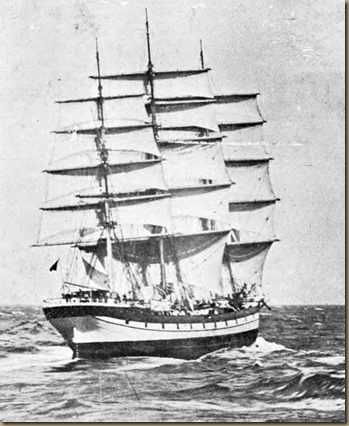

Pinnas
The Pinnas

In April of 1929, the Pinnas, under the command of Captain L. Lehmann and with a crew of 25, Christian Nielsen among them, rounded Cape Horn, bound for the west coast of South America with a load of cement, coal, and general cargo. The Pinnas had been fighting hurricane-force winds for two weeks and making very little headway. Suddenly, the wind dropped, leaving heavy swells that caused the ship to roll up to 50 degrees in either direction. After having weathered 14 days worth of extremely high winds, the heavy rolling proved too much for the Pinnas. Her foremast and mainmast both gave way, breaking a few feet above the deck. The mizzenmast also cracked just above the top, and the mizzen topsail and yards dropped to starboard. The Pinnas was now almost completely at the mercy of the sea.

The crew set to work cutting down the remains of the steel mizzen topmast, which had not completely parted, and which now hung against the side of the ship and threatened to damage the hull plating. Once the topmast had been cut away, the crew rigged an emergency aerial to the remains of the mizzenmast so that the radio officer could send an SOS.
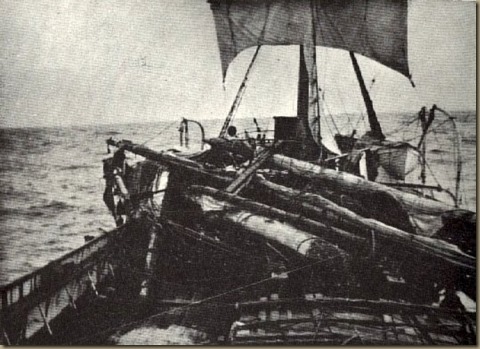

pinnas - view astern of wrecked mastsThis remarkable photograph shows the extent of the damage suffered by the Pinnas. View is looking aft, across piles of wrecked masts, sails, and rigging, with the remains of the mizzenmast still rigged in the background near the ship's stern.


The Pinnas' distress signal was picked up on the evening of April 22nd by the Chilean steamer Alfonso, which was bound for Punta Arenas. The captain of the Alfonso, Jorge E. Jensen Hansen, made haste for port, and informed the local authorities in Punta Arenas of the situation. The Alfonso received orders to load up with fuel and provisions and to set sail immediately to aid the Pinnas.


AlfonsoThe Chilean steamship, Alfonso


At dusk on April 24th, the Alfonso reached the Pinnas' location, about 200 miles west-southwest of Cape Horn. They found the German ship with her masts, sails, and rigging on her deck, with the crew trying to use the remaining mizzen sail to hold the ship into the wind, so that it wouldn't continue to roll on the rough seas. Captain Jensen hoped to be able to approach the Pinnas so as to lend assistance, but the weather had worsened again, with high winds and hail making a close approach too dangerous. The Alfonso, therefore, remained nearby for almost three days, waiting for weather conditions to improve.

Finally, on the morning of April 27th, the weather eased up somewhat and Captain Lehmann of the Pinnas radioed the Alfonso with an urgent request for assistance. The Pinnas was rapidly taking on water, and the decision had been made to abandon ship before the hull began to break up. Captain Jensen tried to bring the Alfonso alongside the Pinnas to rescue the crew, but the Pinnas was still rolling too badly.

Instead, Jensen ordered second mate Enrique Imhoff to take five men and one of the Alfonso's boats and row across to the Pinnas to effect a rescue. Since the rolling of the dying ship made an approach from either side impossible, Imhoff decided instead to row around to the Pinnas' bow. A pilot ladder was lowered from the Pinnas' bowsprit, and Imhoff and his men safely transferred the Pinnas' crew to the Alfonso in two trips, with Captain Lehmann being the last to leave his ship. Once the Pinnas' crew were all safely aboard, the Alfonso returned to Punta Arenas. The Pinnas herself was left adrift, and presumably sank somewhere off the southwestern coast of Chile.


Pinnas - rescue by crew of AlfonsoA boat from the Alfonso rows across to the Pinnas (background) to rescue her crew.


Along with the rest of his crewmates, able-bodied seaman Christian Nielsen survived the wrecking of the Pinnas. He had suffered a broken jaw during the shipwreck, but one of his fellow sailors, F. Steffans, managed to set Nielsen's jaw using a piece of wood. Many years later, Nielsen's son Rink served as second officer on a Laeisz ship on which Steffans was also serving as a boatswain.

Nielsen and his crewmates spent the next two weeks recovering in Puntas Arenas, then boarded a steamer back to Germany.

(An excellent, detailed account of the wreck of the Pinnas and the rescue of her crew by the Alfonso, written by Chilean Contralmirante Roberto Benavente, can be found HERE.)

Later that year, in July of 1929, Nielsen signed on with the crew of the luxury yacht
Orion. Commissioned by wealthy American textile magnate Julius Forstmann and built at the Krupp shipyards in Kiel, the 333-foot Orion spent seven months, from November 1929 until early June of 1930, cruising Forstmann's family around the world. Christian Nielsen was part of the Orion's crew of about 55 (depending upon the leg of the voyage in question.) The Orion was later sold to the US Navy in 1940, refitted as a gunship, and renamed the USS Vixen. It served as the flagship for the Commander-in-Chief of the Atlantic Fleet throughout World War II.


Orion - USS Vixen 2The former luxury yacht Orion, refitted as a US Navy patrol gunboat and rechristened USS Vixen.


In 1931, Nielsen received his officer's patent papers, and in 1932 he was similarly certified as a ship's radio operator. That same year, he received training in aerial navigation, and then in 1933 he trained as a pilot. In October of 1933, Nielsen enlisted in the German Navy, becoming an officer by 1935. He then transferred to the Luftwaffe in October of 1935 where he received further aviation training.

CN004Christian Nielsen during his Luftwaffe flight training, circa 1935. (photo courtesy of Maiken Nielsen)

Just after the New Year, in January of 1936, Christian Nielsen retired from active military duty and was hired by the Deutsche Zeppelin Reederei. He and his wife Maria, pregnant with their first child, moved from Sylt down to Friedrichshafen. There, Nielsen joined the crew of the Graf Zeppelin, which was making regular passenger flights to South America. By early 1937, Nielsen was serving as one of the airship's navigators.

On the Hindenburg's first North Atlantic flight of 1937, Nielsen was flying on the Hindenburg to observe the navigational techniques that had been developed on the newer ship. He augmented a navigation crew consisting of Franz Herzog, Max Zabel, and Eduard Boetius - who was, coincidentally, from the North Frisian island of Föhr, right next to Nielsen's home island of Sylt.

As the Hindenburg approached the mooring circle at Lakehurst at the end of the flight on May 6th, Nielsen was at his landing station in the navigation room at the center of the control car. Shortly after 7:00 PM, Eduard Boetius sounded the ship's signal for landing stations. Captain Albert Sammt, the watch officer on duty, then called Boetius to take over on the elevator wheel, and Nielsen sounded the second landing stations signal a couple minutes later. Nielsen was standing on the port side of the navigation room along with Max Zabel, and they watched the ground crew take up the yaw lines after the lines were dropped from the ship's bow. As a gust struck the port beam of the ship and the portside yaw line tightened, Nielsen saw the landing crew giving ground as the ship drifted to starboard.


Christain Nielsen's location in the control car at the time of the fire.


Suddenly, the ship gave a violent jolt which threw Nielsen against the aft wall of the navigation room. Initially, he had no idea what the jolt was. His first thought was that the tightening portside yaw line had snapped, but then realized that the jolt had been too heavy for that. It was not until he pulled himself to his feet, with the ship dropping down by the stern, that he was able to get to one of the starboard windows and look aft, where he saw "a gigantic ocean of fire". The increasing inclination of the ship made it impossible for Nielsen to keep his footing, and he saw the drawers of the chart cabinet sliding open and spilling their contents across the floor. He slowly worked himself over towards the window on the port side of the navigation room as the ship neared the ground, looking for his chance to jump, but he held back for a moment when he noticed that they were still too high. He then looked forward and saw Eduard Boetius at the portside window next to the elevator wheel, also ready to jump. As the ship descended to within 10 to 15 feet of the ground, both men jumped, almost simultaneously.


Nielsen escape (1)Christian Nielsen (arrow) drops to the ground after jumping from the control car. Eduard Boetius is crouched on the ground just in front of him, having jumped from the window beside the elevator wheel a split second before Nielsen.


Nielsen landed safely and ran clear of the ship, just before it collapsed to the ground behind him. He looked back over his shoulder and saw that the entire ship was on the ground burning, then continued on until he was about 60 or 70 feet further away from the wreckage before turning around and running back to the passenger decks to assist in rescuing survivors. As he approached the wreck and prepared to climb up into the dining salon, Nielsen saw 16 year-old passenger Irene Doehner standing up on one of the portside observation windows, her hair and clothes afire. She jumped through a broken window, and when she landed Nielsen and two other rescuers quickly put out the fire on her clothes and hauled her to safety. Then, together with Boetius, Captain Walter Ziegler and steward Fritz Deeg, Nielsen climbed up into what was left of the portside dining salon. They located several passengers who had not yet made their way out of the ship, and led them to safety. Nielsen noticed that the passenger cabins in the center of A-deck were completely destroyed by fire, and left the wreckage soon afterward.

Christian Nielsen was virtually unhurt in the crash, and stayed in the States for slightly more than two weeks after the disaster. On May 19th, he testified before the US Commerce Department's Board of Inquiry into the Hindenburg fire, and within the next couple of days he sailed back to Germany with a group of his fellow surviving crew members aboard the steamship Bremen.

In September of 1939, with Germany officially at war, Nielsen volunteered for service with the Luftwaffe. He was assigned to a coastal patrol squadron in November of 1940 and stationed in France. On January 25th, 1941, Christian Nielsen was killed in action over the Bay of Biscay.


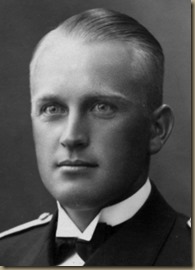
(Many thanks to Maiken Nielsen, Christian Nielsen's granddaughter, and her father, Rink Nielsen, for providing me with details about Christian's life. as well as Christian in his Luftwaffe trainer and the portrait photo that opens this article.)

Tuesday, December 30, 2008

Eduard Boëtius


Crew Member

Age: 27

Hometown: Föhr, Germany

Occupation: Navigator (third officer)

Location at time of fire: Elevator wheel, control car

Survived


Eduard Boëtius (pronounced "Boh-ey-tee-us") was a navigator on the Hindenburg's final flight, along with Max Zabel, Franz Herzog, and Christian Nielsen. Born on the North Frisian island of Föhr in 1910, Boëtius went to sea at age 19, signing onboard the Laeisz Transport Company's four-masted, square-rigged barque Peking. He spent two years serving on the Peking, rated first as an ordinary seaman and eventually as an able seaman. When the Peking was sold in 1932, Boëtius transferred to the Laeisz steamship Poseidon. During his four years as a merchant seaman, Eduard Boëtius made the perilous journey around Cape Horn six times. Having occasionally been allowed to stand at the helm during his time onboard the Peking, and more often when serving on the Poseidon, Boëtius had shown himself to have considerable talent at the wheel of a ship, particularly in difficult waters such as the Straits of Magellan.

In 1934, therefore, Boëtius began studying at the navigation school in Hamburg. After two years of study, he passed his examinations and became licensed as a ship's officer and also as a radio operator. A classmate named Gerd von Mensenkampff, who was employed with the Deutsche Zeppelin Reederei and training to be an airship navigator, convinced Boëtius to look to the future and consider a career as an airshipman. The Zeppelin Company was in the process of establishing an international airship service, and was planning to build a fleet of passenger airships – for which they would obviously need a growing number of trained navigators and watch officers.

Eduard Boëtius was hired by the DZR in May of 1936. His first flight was a short transfer flight on May 22nd, 1936 from Frankfurt to Friedrichshafen aboard the LZ-127 Graf Zeppelin, though he had not yet been assigned duties. Once in Friedrichshafen, he began undergoing training in preparation for a position on the DZR's new ship, the LZ-129 Hindenburg. He would begin as a rigger under Chief Rigger Ludwig Knorr, and move up through the various command crew stations (helmsman, elevatorman, navigator, watch officer) and eventually perhaps even be given a command of his own.

His first flight as a member of the Hindenburg's crew was on June 16th, 1936. The ship had been chartered by the Krupp Company, one of Germany's leading armament manufacturers, for a company outing for various company executives as well as several Krupp family members. During this flight, which was primarily over Switzerland, Boëtius served as a rigger. He progressed quickly, however, and by August of that year he was already standing watch at the rudder wheel in the control car. Shortly thereafter, he shifted over to the elevator wheel, where his natural talents as a helmsman on a seagoing vessel took on a new dimension as he guided the Hindenburg through the vertical plane, using feel and instinct as much as instruments to maintain the ship's pitch.


Eduard Boëtius at the elevator wheel of the Hindenburg.


By the time of the Hindenburg's first North American flight of the 1937 season during the first week of May, Eduard Boëtius had been promoted to navigator. Along with fellow navigators Franz Herzog, Max Zabel, and Christian Nielsen, Boëtius determined the ship's course, drift, position, and speed using the very latest in long-range navigational techniques and weather forecasting methods.

As the Hindenburg came in on its final landing approach to the Naval Air Station at Lakehurst, NJ on the evening of May 6th, Boëtius was in the navigation room in the center of the control car along with Nielsen and Zabel. He sounded the signal for landing stations shortly after 7:00 PM. The still somewhat unfavorable weather conditions over Lakehurst prompted the watch officer on duty, Captain Albert Sammt, to order Boëtius, more experienced and steady-handed as an elevatorman, to take over the elevator wheel in place of Ludwig Felber, who had only recently begun to stand watch as an elevatorman. Felber turned the wheel over to Boëtius with the ship about 3-4 degrees light in the bow and slightly tail-heavy, and then proceeded forward to take a landing station in the bow.


Eduard Boëtius' location in the control car at the time of the fire.


As the Hindenburg floated over the landing field and the ground crew was taking up the landing lines, Boëtius felt the ship jerk suddenly. He looked out a window and saw a reddish glow in the air, but was not immediately aware that the ship had caught fire. As the stern dropped and the bow pointed up at a 45-degree angle, Boëtius clung to his elevator wheel as the rest of the command crew lost their footing. Amazingly, however, Boëtius noticed a complete lack of panic in the control car. He looked out the front windows of the car and saw crew members falling from the bow of the ship, some from a fairly great height. As Boëtius later learned, the fire shot out the bow in a great pillar, killing most of the men who had been stationed there, including Ludwig Felber, whom Boëtius had replaced at the elevator at the last moment.

When the ship's bow began to drop, Boëtius climbed up onto a window just aft of his elevator wheel. He hesitated, not wanting to leap too soon and perhaps break a leg and not be able to run clear of the wreck. Captain Heinrich Bauer, standing behind Boëtius and wanting to use the same window for his own escape, called out "Jump, Eddi!" However, Boëtius knew that the ship was still too high in the air yet. He waited until the landing wheel under the control car touched the ground, and then jumped from a height of 10 to 12 feet. He landed on his feet and ran to portside with all his might to get out from under the descending wreckage.


Eduard Boëtius crouches in a control car window (arrow) preparing to jump. Navigator Christian Nielsen is doing the same in the window just aft of Boëtius.


Boëtius (arrow) lands on the ground after jumping from the control car. Nielsen drops to the ground just behind him, having jumped from the navigation room window a split second after Boëtius.


Boëtius made it clear of the wreck, which collapsed to earth just behind him, and he then ran back toward the ship where he found engineer Raphael Schädler lying unconscious on the ground a short distance from the #4 engine car. Boëtius hauled him over to some sailors who were showing survivors to trucks and ambulances. He then headed for the passenger decks along with Captain Walter Ziegler, steward Fritz Deeg, and fellow navigator Christian Nielsen in an attempt to rescue as many of those trapped in the wreckage as possible. They returned to the wreck several times until the structure had completely collapsed and there was no hope of rescuing anyone else. Boëtius then headed around the bow to the starboard side. There, he found elevatorman Kurt Bauer lying dazed on the ground some distance from the wreck. Bauer got up, and the two of them walked back around the bow to the port side, and saw rescuers carrying a body from the ruins of the ship's nose section.

The next day, Boëtius returned to the wreckage and searched around the general vicinity of his crew quarters, looking for any of his possessions which might have survived the fire, particularly a set of cufflinks that his father had given to him. Normally, Boëtius wore them with his uniform, but since it had been such a warm day as they flew into Lakehurst, Boëtius had opted to wear a short-sleeved shirt under his uniform jacket, and had left his cufflinks in his quarters. Amazingly, he managed to find one of them amid the charred wreckage. He carried it with him for the rest of his life as a memento.

Eduard Boëtius testified before the US Commerce Department's Board of Inquiry into the Hindenburg fire on May 19th, and slightly more than two weeks after the disaster he, along with a number of his fellow crew survivors, sailed home to Germany onboard the steamship Bremen, arriving in Bremerhaven a week later on May 28th. On his return to Germany, Eduard Boëtius was, along with several other crew members, awarded a medal for his efforts in rescuing passengers.

Boëtius continued to work with the DZR, serving aboard the LZ-130 during its short operational life beginning the following year. Not long after this, he was drafted into the German navy, and was made captain of a U-boat supply ship (a converted whaler) in the sea near Norway. The ship was struck by a Russian torpedo while fleeing pursuers, and sank within minutes. After seeing his entire crew into lifeboats, Boëtius leapt into the icy water, and was lucky enough to be picked up before he drowned. It was the second time that Eduard Boëtius had narrowly avoided death.


Eduard Boëtius circa 1984


In an interview with the German magazine "Der Spiegel" in 2000, Boëtius was asked whether he thought it pure chance that he had escaped death twice. He replied, "I think about that to this day. What is chance, what is fate? I can't find an answer, and perhaps that's just as well." When asked if his experiences have affected the way he views death, Boëtius answered, "When the time comes, I'm ready. It's been a long, but never dull life. When I look back, I was always a man who had to do with the end of an era. I experienced the ending of the great sail ships, and then the demise of airships, the end of whaling, and then after the war, the end of traditional parcel service giving way to containerized shipping." When the interviewer remarked that Boëtius sounded resigned to having always come in on the losing end of these things, Boëtius asked him, "Do you know any 90 year-old who isn't resigned?" and continued, "As far as my professional life is concerned, it shows me how rather short-lived so-called progress is."

Eduard Boëtius passed away on November 7, 2002, in Schülp, Germany, where he had retired just down the coast from his home island of Föhr. He was 92.


(Special thanks to Siegfried Geist, whose obituary for Herr Boëtius helped me to fill in a lot of information about Boëtius' post-Zeppelin life. I also was able to glean a great deal about Boëtius' earlier life as a merchant marine and his eventual employment with the Zeppelin Company from the book "Phoenix aus Asche" – titled simply "Phoenix" for its English-language release, by Eduard Boëtius' son Henning, who based his book in part on his father's life story.)